ABOUT
The people closest to crisis are the architects of peace.
I was raised in a family of eleven children, trained as a physician under a dictatorship, and entered public life during a revolution. Everything I have built since has come from the same observation: the people carrying the consequences are usually the last people permitted to make the decisions.
Chapter 01
The Prairies
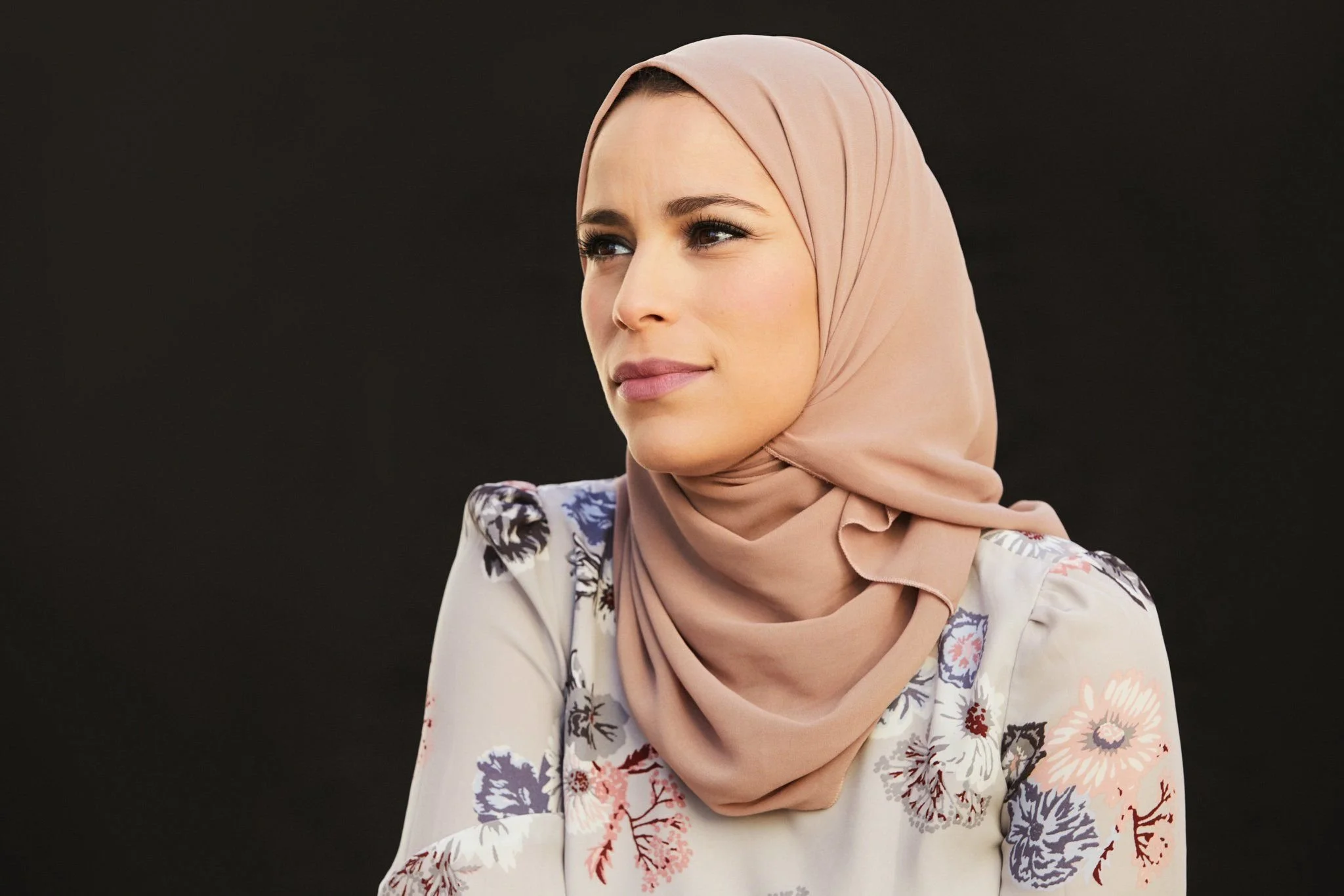
I was born in Saskatoon to Libyan parents — the middle child of eleven in a household where dinner required strategic planning and debate was a contact sport. My father, Mohamed, believed education was the only inheritance worth leaving. My mother, Najat, was the one who held the whole operation together.
Saskatchewan shaped me in ways I didn't fully recognize until later — the directness, the assumption that you show up for your neighbours, the code-switching, the negotiation of belonging to a faith community that made up 0.12% of the province. It taught me diplomacy before I had the word for it. Find what someone actually wants, and you can almost always find common ground.
Chapter 02
Zawia
In 2005, at fifteen, I completed high school and my family moved back to Libya. I went from the Canadian prairies to a country under dictatorship — navigating a new language, a surveillance state, but also finally understanding my roots, my extended family, the culture my parents had carried across an ocean.
I enrolled in medical school at the University of Zawia. Jon Stewart would later nickname me "the Libyan Doogie Howser." I studied under a regime that controlled what you could read, where you could gather, and what you could say out loud. I trained as a physician in a country that was coming apart.
Chapter 03
Revolution at Twenty-One: Creating Voice of Libyan Women & Noor Campaign
In 2011, the Libyan revolution broke out. I was 21 and in my final year of medical school. The women around me — neighbors, classmates, mothers — were holding families and entire communities together under bombardment, and being systematically shut out of every decision about the country they were keeping alive.
The people closest to the cost of the war had the clearest read on what peace would actually require. And they were absent from every room where that peace was being designed. I had no background in policy, no institutional backing, and no real plan. But I did have conviction that this was wrong, and a refusal to wait. So I created Voice of Libyan Women (VLW).
I built VLW around a simple idea: that security and peacebuilding without women isn't peacebuilding; it's a shorter ceasefire. We worked on conflict resolution and political transition with women at the center, not the margins.
Then came the Noor Campaign. I was clear from the start that this couldn't be run from an office in Zawia and shipped out to the rest of the country. In Libya, trust is local, and faith is load-bearing—so we built Noor as a decentralized movement, not a program. Each city had its own teams, leadership, and identity, grounded in a shared belief: that Islam calls women to dignity, leadership, and full participation, and that exclusion was never theological; it was interpretive. Human Rights Watch later called the work a turning point for women’s rights globally.
I didn't know it at 21, but that was the model: locally led, faith-aligned, decentralized in execution, uncompromising at the core. It's the shape of everything I've built since.
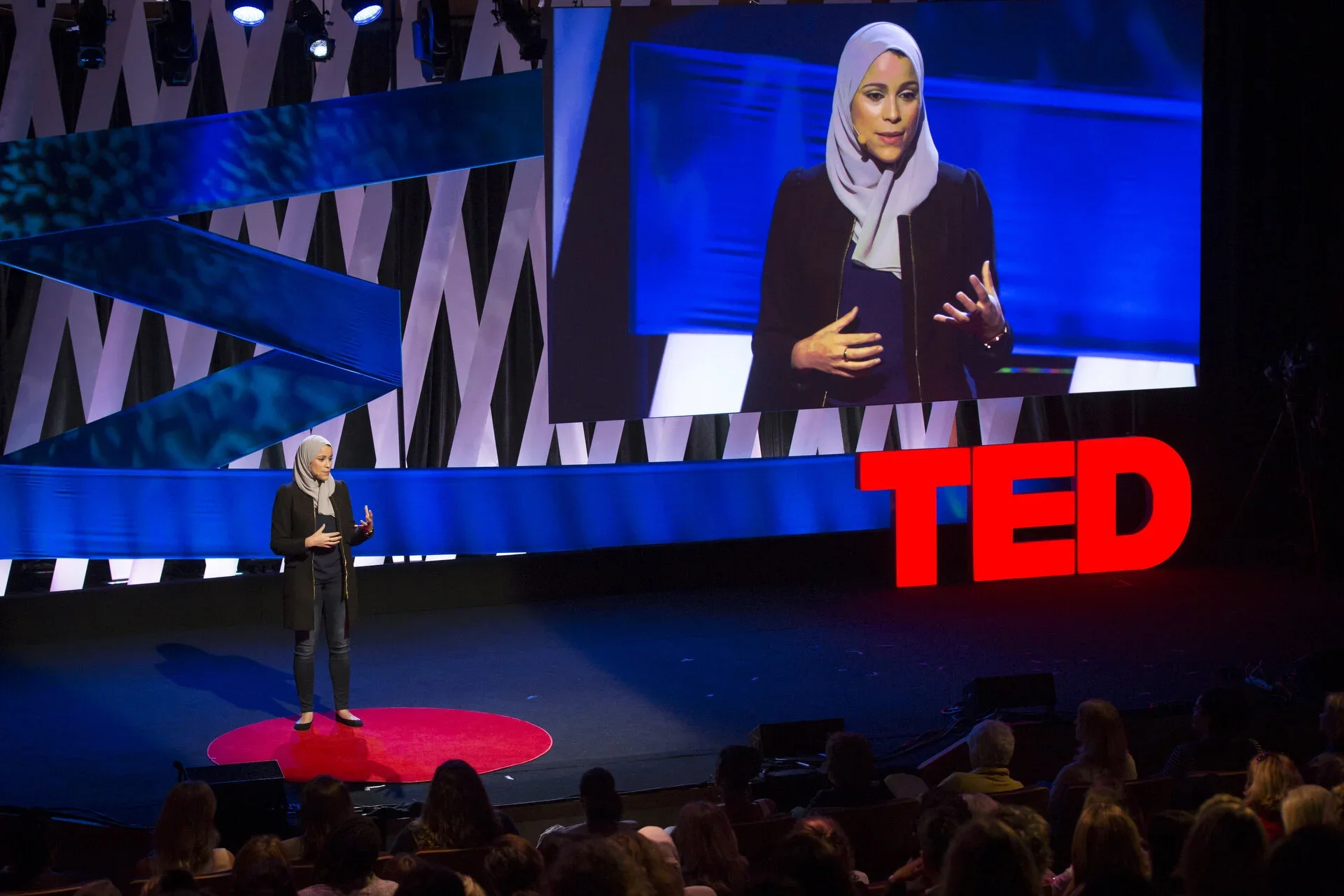
My TED Talk on this work has been viewed more than nine million times. The New York Times called it one of "four moving TED Talks you should watch right now." What mattered more were the coalitions that formed afterward, the policy that shifted, and the people who reached out to say they'd started something in their own communities.
Chapter 04
Fifteen Years of Women, Peace & Security
Voice of Libyan Women was a beginning, not an endpoint. Over the next fifteen years, I worked to move women from the margins of peace processes into the architecture of how peace itself is designed.
The UN Secretary-General appointed me to the High-Level Advisory Group for the Global Study on the implementation of UN Security Council Resolution 1325 — the landmark review examining a decade of progress on women, peace, and security worldwide. I served on the UN Women Global Civil Society Advisory Group.
I helped advance four resolutions through the UN Security Council — Resolutions 2122, 2242, 2467, and 2493. Each one expanded what it means for women to participate in peace: from how we prevent conflict before it starts, to how we counter violent extremism, to how survivors of sexual violence in war access justice. I briefed the Council directly. I worked alongside President Jimmy Carter, Leymah Gbowee, and others who understood that peace built without women can’t last.
I joined the boards of the Malala Fund and International Alert and led Phase Minus 1 — working on proactive health and security system capacity-building before crises hit, shifting the paradigm from response to readiness in fragile settings.
The Women, Peace and Security agenda is a security framework. Fifteen years of evidence shows that when women participate in peace processes, the resulting agreements are more durable, more inclusive, and more likely to hold.

Chapter 05
Designing the Global Architecture
The work on women, peace, and security kept leading to a larger question: how do you build systems that don't just respond to crises but prevent them? That question led me to the systems that govern how global priorities are set and financed.
I co-architected the Sustainable Development Goals — fighting for the inclusion of Goal 16 (Peace, Justice, and Strong Institutions) and making sure the framework centered the people with the most to gain and the least voice. As a co-architect of the framework, I helped shape the system that now guides how governments, companies, and multilateral organizations in 190+ countries align trillions of dollars with measurable outcomes in health, education, security, and poverty elimination.
Secretary-General Ban Ki-moon appointed me UN Sustainable Development Goal Advocate. Antonio Guterres reappointed me. I spoke at the first-ever SDG Moment during the General Assembly.
In 2016, I was appointed as UN High-Level Commissioner for Health, Employment, and Economic Growth, a role co-chaired by the Presidents of France and South Africa. The Commission's mandate was grounded in a simple conviction: health workers are not a cost but an investment — in survival, in women's employment, in the economic resilience of the communities that need it most. Its recommendations target the creation of 40 million health sector jobs, the closing of an 18 million-health-worker shortfall, and measurable improvements in health access and outcomes for billions of people in low- and middle-income countries.
Chapter 06
Five Years, Two Firsts, One Billion Dollars ...& Proving Islamic Philanthropy Can Fund Maternal and Child Survival
From 2020 to 2025, I served as the inaugural Global Policy, Program Advocacy and Communications Health Director at the Gates Foundation. In this role, I led a multi-hundred-million-dollar global health portfolio spanning gender equality, maternal and child survival, and health systems strengthening. Over five years, I directed more than $1 billion toward global health and development programs.
I conceived and created the first zakat-certified collaborative for maternal and child health, Every Pregnancy (formerly For Mama). I built a movement that aligned faith-based giving with maternal survival from initial design through institutionalization. It raised $13 million in its first Ramadan and $130 million across three Ramadans, with more than 50 partner organizations participating globally. When I left the Foundation in early 2025, I spun For Mama out as an independent entity and appointed a CEO to lead it.
For Mama revealed something the development sector had been slow to recognize, and that those of us inside the tradition had always known: Islamic philanthropy—zakat, sadaqah, and Ramadan giving—is one of the largest annual flows of charitable capital in the world. It is not niche or supplementary. It is faith practiced as economics, at a scale most systems do not measure. The architecture to direct it toward the mothers and children who need it most is not theoretical—it is buildable, and For Mama built it.
Three years in, more than 50 organizations globally unite under the For Mama model every Ramadan to raise money and awareness for moms and babies, and it has catalyzed $130M+ across three Ramadans.
That work exposed a larger gap: the absence of sustained financing architecture for maternal and newborn health at scale in Africa. I conceived and co-developed The Beginnings Fund, a $600M+ collaborative designed to reach 34 million mothers and babies and save over 300,000 lives by 2030.
In parallel, I led the Foundation’s global advocacy strategy for women’s health, transforming how the world’s most influential private funder approaches women’s health and catalyzing a ripple effect across the sector. This contributed to a landmark analysis identifying a $1 trillion annual GDP opportunity from closing the women’s health gap, reshaping how governments and investors understand women’s health as an economic imperative.
I also led the Foundation’s programmatic assessment in fragile settings and built its Fragile, Conflict & Violence community of practice, ensuring that contexts with the greatest need and least stability were not treated as afterthoughts. During this time, I served as a board member (alternate) for Gavi, the Vaccine Alliance, one of the world’s most significant partnerships for child survival.
Chapter 07
What I'm Building Now
The same pattern continues: building financing and institutional architectures that move capital and legitimacy to the people closest to the problem. At 500 Global, I built the Sustainable Growth practice — bringing private-sector capital into climate, development, and security across the economies the global financial system has historically priced out. Public-private coalitions that move capital where the order of capital hasn't reached, and prove that blended finance can deliver sovereign-scale outcomes for dignity.
Alongside that work, I chair Girls Not Brides: The Global Partnership to End Child Marriage, serve as a trustee of Women for Women International, and serve as a Lancet-Georgetown Commissioner on Faith, Trust and Health — the first global initiative centering the role of faith in rebuilding trust in health systems, bringing together 27 commissioners from across all six WHO regions to produce a landmark report.
And I'm building what I believe is the most important thing I'll ever make: a global institution that turns faith-aligned capital into lives saved and peace that holds.
The thread is the same as it's been since I was 21: financing, policy, and institutional architecture that makes resources reach the people who need them most. The next decade of that work is the one I'm most interested in building.
Peace begins with survival, and only holds when dignity and power are shared.
Off the Record
When I am not negotiating peace and security or architecting financing mechanisms, I am the full-time personal assistant to two tiny, very demanding executives: my daughter and my son.
They have no interest in my work, zero awareness of my schedule, and an uncanny ability to schedule a meltdown precisely when I'm on a call with a head of state. They are, without question, my most important teachers - and the reason I take "does this actually work" more seriously than "does this look good on paper."
Credentials
Education & Appointments
-
Medical Degree
Doctor of Medicine (MBBS)
University of Zawia, Libya
-
Masters
MSc International Strategy & Diplomacy (Distinction)
London School of Economics
-
Fellowship
Harvard Radcliffe Fellow
Harvard University · Architects of Peace: Women in Security
-
Fellowship
MIT Media Lab Director’s Fellow
Massachusetts Institute of Technology
-
Fellowship
Ashoka Fellow
First Ashoka Fellow from Libya
-
Certification
ICC Hague-Certified Investigator
Sexual & Gender-Based Violence
-
Appointments
UN High Level Commissioner
Health, Employment & Economic Growth (Appointed 2016)
-
Appointments
Georgetown Lancet Commissioner
on Faith, Trust & Health (Appointed 2025)
-
Appointments
UN Sustainable Development Goal Global Advocate
(Appointed by UN Secretary Generals Ban Ki-Moon and Antonio Guterres)
GOVERNANCE
Leadership & Board Positions
-
Founder
Voice of Libyan Women
Peace, security & women's leadership · Founded 2011
-
Creator
For Mama (now Every Pregnancy)
$38M raised · 500K+ mothers & babies served
-
Founder
500 Global Sustainable Growth
Blended finance for climate & development in frontier markets
-
Co-Founder
Omnis Institute
10M Women's Health Fund
-
Co-Founder
New Now
Next-generation leadership for global systems change
-
Current
Young Global Leader
World Economic Forum
-
Current
Board Chair
Girls Not Brides - The Global Partnership to End Child Marriage
-
Current
Board Member
Women for Women International
-
Current
Strategic Advisor
SEED Global Health
-
Former
Board Member
The Malala Fund
-
Former
Board Member (alternate)
Gavi, The Vaccine Alliance
-
Former
Trustee
Keeping Children Safe
-
Former
Trustee
International Alert
-
Former
Trustee
Malaria No More UK
RECOGNITION
Selected Honors & Awards
-
![Harvard Radcliffe Institute logo]()
Harvard Radcliffe Fellow
Harvard University
-
![MIT Media Lab logo with text 'director's fellows program']()
MIT Media Lab Director's Fellow
Massachusetts Institute of Technology
-
![UCD Dublin logo featuring three candles, the text 'UCD Dublin', and a harp symbol on a shield background.]()
James Joyce Award
University College Dublin
-
![Forbes 30 Under 30 logo]()
Forbes 30 Under 30
Forbes Magazine
-
![BBC logo with the words '100 WOMEN' in large font.]()
BBC 100 Women
BBC
-
![The logo of the Government of Canada featuring a stylized maple leaf and text.]()
100 Most Influential Women in History Canada
Government of Canada
-
![Stylized typography with the text 'PTTOW' in black on a white background.]()
Nelson Mandela Changemaker
2018
-
![Close-up of a lowercase letter d with a shadow underneath on a black background]()
Apolitical Gender Equality Top 100
Alongside Ruth Bader Ginsburg & Michelle Obama
-
![CNN logo in black and white]()
CNN Leader
CNN
-
![The word 'WIRED' in black and white text with a typewriter-style font on a white background.]()
WIRED Global Thought Leader
WIRED Magazine
-
![Text reading 'trust conference' in a stylized font.]()
NYT TrustWomen Hero
The New York Times
-
![Harvard Law School logo]()
Woman Inspiring Change
Harvard Law School · Youngest Honoree
-
![WIRED logo]()
Aspen Institute Spotlight Scholar
Aspen Institute Spotlight Scholar
-
![Logo for the Global Citizen Prize with a circular graphic and text]()
Global Citizen Awardee
Global Citizen
-
![The logo of 'The Lancet' medical journal in black and white.]()
Lancet Profile
The Lancet
-
![Logo of the Government of Canada featuring a stylized maple leaf and the text 'Government of Canada'.]()
Canada's Woman of Impact 2021
Government of Canada
-
![Bold black text reads 'The Nobel Prize' with a minimalist design on a black background.]()
Nobel Peace Prize Nominee
Two-time nominee